
Private
Frank Curtis

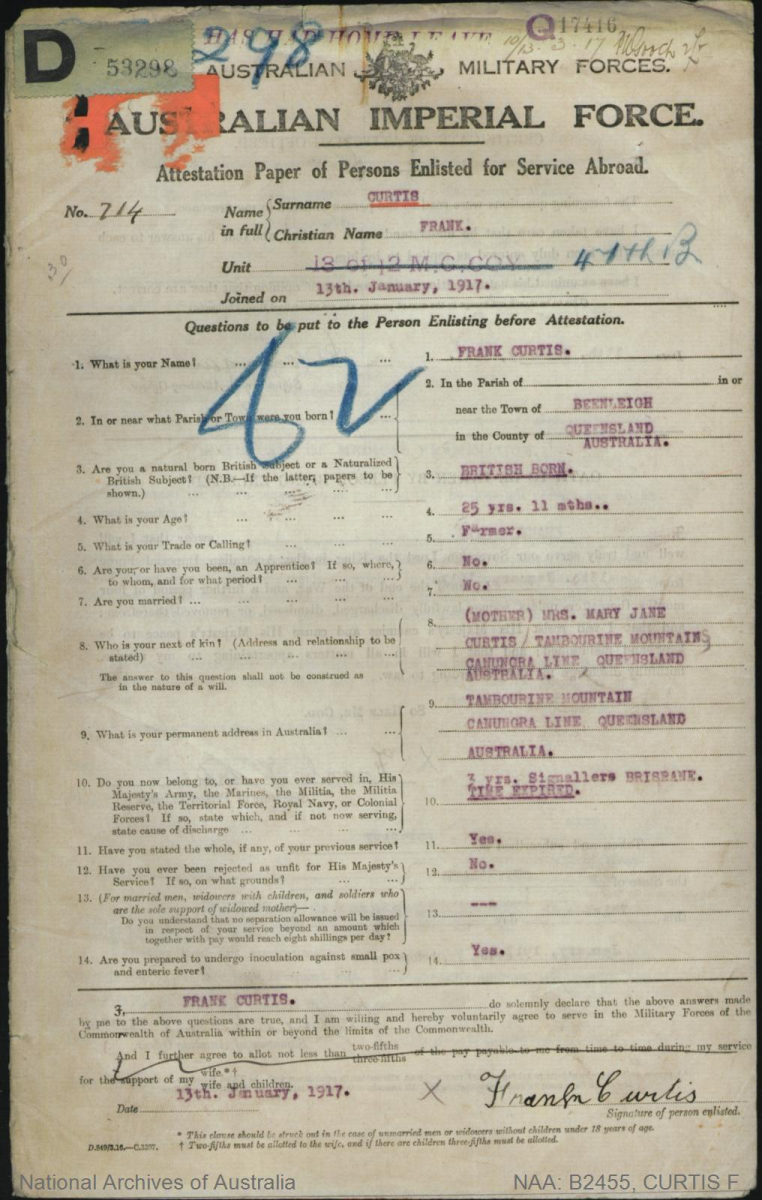
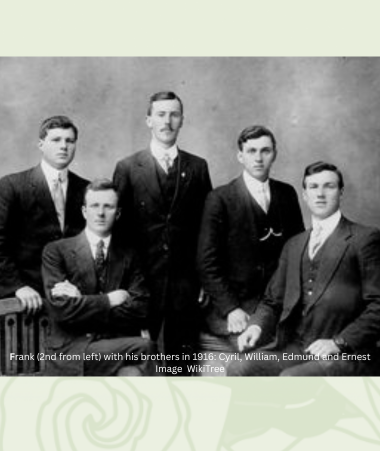
Frank Curtis was born in Beenleigh, Queensland, on the 21st of February 1894 to Mr Edmund Ford Curtis and Mrs Mark Jane Curtis (nee Pollock) as the fourth of their 11 children. His older siblings (from eldest to youngest) were William, Emily and Beatrice. His younger siblings (from eldest to youngest) were Lawrence and Ernest (twin brothers), Norman, Edmund, Jemima Cyril and Lelia.
| Service Number: | 714 |
| Place of Enlistment: | Brisbane, Australia |
| Age of Enlistment: | 25 Years |
| Date of Enlistment: | 13th January 1917 |
| Embarked: | 21st June 1917, Brisbane |
| Transport Ship: | A29 HMAT SS Suevic |
| Medals: | British War Medal, Victory Medal |
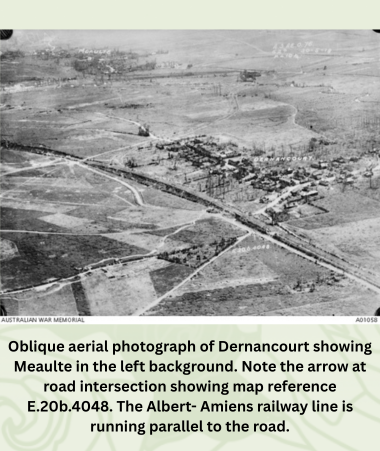
| Place of Death: | Killed in Action, Battle of Dernancourt, France 5th of April 1918 |
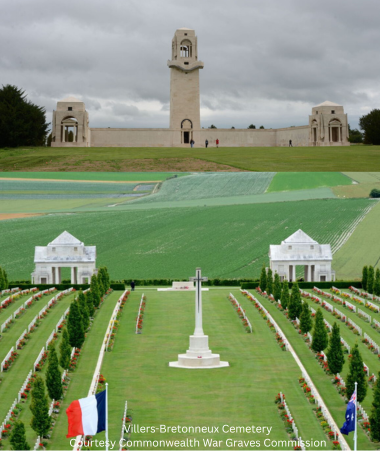
| Resting Place: | Commemorated Villers Bretonneux Cemetery France |
| Unit: | 47th Australian Infantry Battalion AIF |
.png)
Frank Curtis was born in Beenleigh, Queensland, on the 21st of February 1894 to Mr Edmund Ford Curtis and Mrs Mark Jane Curtis (nee Pollock) as the fourth of their 11 children. His older siblings (from eldest to youngest) were William, Emily and Beatrice. His younger siblings (from eldest to youngest) were Lawrence and Ernest (twin brothers), Norman, Edmund, Jemima, Cyril and Lelia. Before his enlistment in the 47th Battalion, Frank Curtis lived in Tamborine Mountain where he worked as a farmer. The 47th Battalion was raised in Egypt on 24 February 1916 as part of the "doubling" of the AIF. Approximately half of its new recruits were Gallipoli veterans from the 15th Battalion and the other half fresh reinforcements from Australia. Reflecting the composition of the 15th, the new battalion was composed mostly of men recruited in Queensland and Tasmania.
After the confusion of battle on the 5th of April 1918, the fate of Private Curtis was initially unclear and he was officially listed as missing. After the war and following inquiries made by the Australian Red Cross, three eyewitnesses - Private’s Rankin, O’Rourke and Dunn - stated that Private Curtis was among a group of men who were taken prisoner during the battle on the 5th of April, although none of these accounts exactly correlate. Private O’Rourke was also taken prisoner and he claims that a German Officer fatally shot Private Curtis in the lower abdomen after his surrender. I am unsure how much weight to give to Private O’Rourke, his account is highly detailed, however there would have been other Australian witnesses, none of whom corroborated this account and his records contain several disciplinary offences. There are other accounts to the Red Cross that place him at a dressing station or saw him dead on the field (and an entirely implausible account that he was later seen in London). We do know that Private Curtis did not become a prisoner of war and his body was never recovered (not an unusual occurrence, particularly in an engagement as hard fought and back and forth as the battle of Dernancourt). He almost certainly died on the 5th of April 1918, possibly after he was taken prisoner.
On the Battle of Dernancourt:
On the 5th of April the 47th Battalion was on the line near the town of Dernancourt. Anticipating an attack they successfully launched patrols to locate and disperse the Germans. The Germans responded by heavily shelling the 47th Battalion (both gas and high explosive shells were used) followed by a significant assault on the Australian position. This lasted 4 hours and the 47th held their position, inflicting heavy casualties on the attacking Germans. The 47th was then reinforced by the Australian 49th and 45th Battalions. The Australians counterattacked but ran into heavy machine gun fire, despite this they carried the enemy position with a bayonet charge halting the attack due to casualties. This battle was a part of Operation Michael, the enormous 1918 German spring offensive. The 5th of April marked the final day and ultimate failure of Operation Michael.
Defending Amiens: The AIF In The German Spring Offensives Of March And April 1918
Video Australian war Memorial
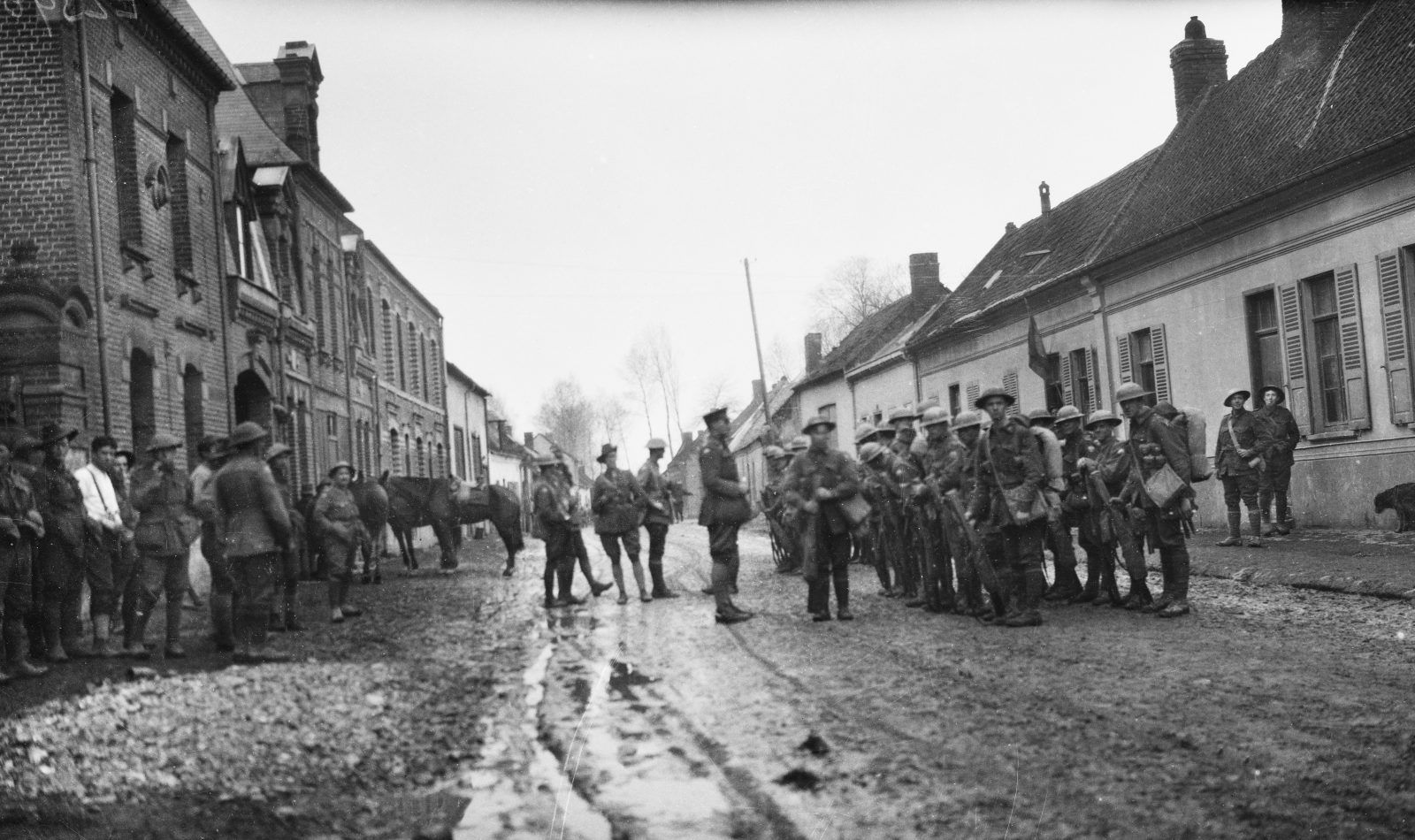
Reinforcements for the 52nd Battalion at La Neuville, near Corbie, 12 April 1918.
They would replace some of the men lost in the fighting at Dernancourt where Private Curtis died a week earlier. (AWM E02396)
Medals & Awards
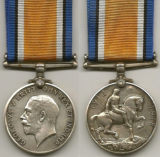
The War Medal is a campaign medal of the British Empire which was awarded to the officers and men of British and Imperial forces for their service in the First World War.
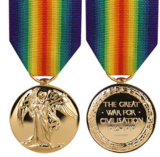
The Victory Medal was awarded to all those who served in the armed forces during the First World War. Civilians who worked with the armed services as well as those who served in military hospitals also received this medal.
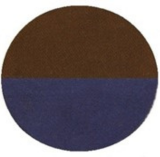
47th Infantry Battalion Patch is a circular colour patch with horizontally divided brown over dark blue.
Worn as a distinguishing unit indication at the head of each sleeve from 1916.
.png)
.png)